Punjab Newsline | Chandigarh
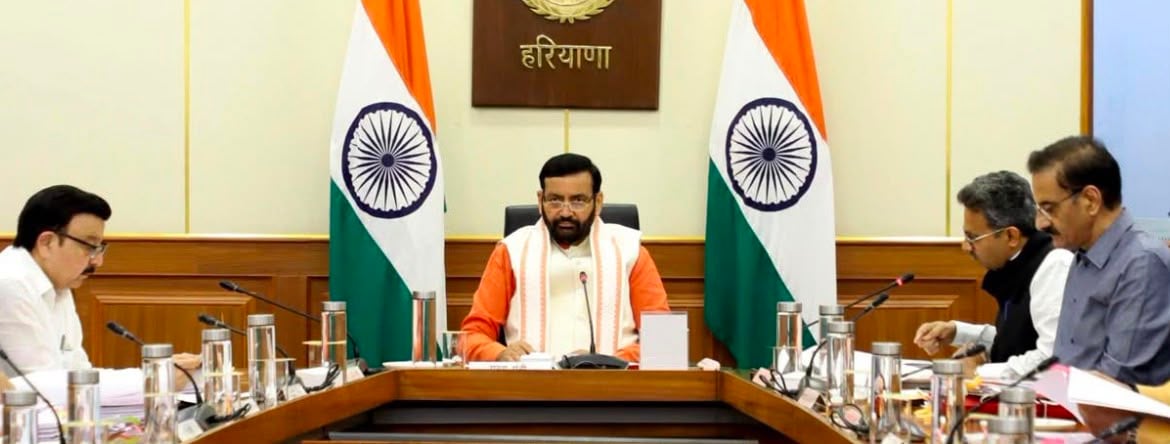
Haryana Cabinet chaired by Chief Minister Nayab Singh Saini, held an important meeting at the Haryana Secretariat on Tuesday. The meeting lasted for nearly three and a half hours, during which ministers discussed 26 agenda items. Out of these, 22 proposals were approved, making it one of the most significant Cabinet meetings of the year.
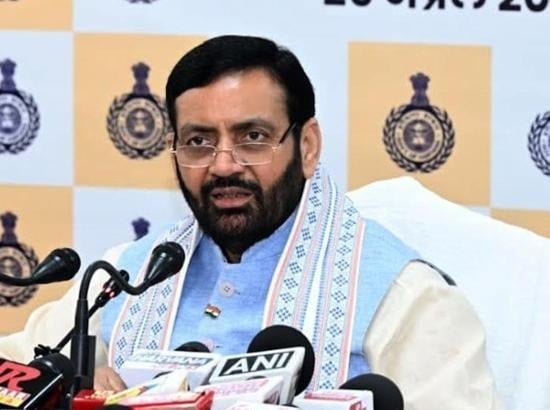
After the meeting, CM Saini addressed the media and shared details of the Cabinet’s decisions. He began by congratulating para-athlete Sharmila Dhankhar for winning a gold medal at the Commonwealth Games, describing her achievement as a proud moment for Haryana and the country.
Chief Minister also announced that Kalash Yatras will be organized in all districts of Haryana on the occasion of Guru Ravidas Jayanti. He informed that a BJP delegation has already reached Varanasi to bring the sacred Kalash. The Kalash will first be placed at Sheetla Mata Temple in Gurugram and then taken across the state as part of the religious celebrations.
One of the most important decisions taken by the Cabinet was regarding Agniveers. CM Saini said that former Agniveers will receive the benefit of direct recruitment reservation in Haryana government jobs, with 20 percent horizontal reservation being provided to them. The move is aimed at giving better employment opportunities to youth who have served under the Agnipath scheme.
Cabinet also approved a new property tax formula, which the government says will simplify the taxation system and provide relief to many property owners. Along with this, Haryana announced major incentives for electric vehicles (EVs) to encourage green mobility and reduce pollution.
Under the new EV policy, vehicles priced up to ₹30 lakh will receive 100 percent exemption from vehicle tax, while EVs costing more than ₹30 lakh will get 50 percent exemption. The government believes this step will boost the adoption of electric vehicles across Haryana.
Another major decision was the approval for the formation of the Haryana State Minority Commission. The commission will consist of one Chairperson, five non-official members and one Secretary, with a tenure of three years. It will have powers similar to those of a civil court, enabling it to investigate complaints, monitor government schemes and make recommendations for the social, educational, economic and cultural development of minority communities.
Cabinet also approved concessions under Pradhan Mantri Awas Yojana–Urban 2.0 (PMAY-U 2.0). Economically Weaker Section (EWS) beneficiaries purchasing eligible residential units of up to 60 square metres will receive relief in stamp duty and registration charges, and a fixed fee structure will be implemented to make housing more affordable.
In the field of higher education, the Haryana government approved a proposal to bring a bill in the Assembly for establishing Kusum International University in Rewari district. According to CM Saini, the university will help increase the Gross Enrollment Ratio (GER) in line with the National Education Policy (NEP) 2020 and provide new opportunities for students in southern Haryana.
Cabinet also introduced an important measure concerning human rights and police accountability. In cases of death caused by police custody, torture, assault, suicide in custody or negligence during duty, the legal heirs or nearest relatives of the deceased will be entitled to ₹7.5 lakh compensation. However, compensation will not be granted in cases of natural death, illness, escape from custody or natural disasters.
Another significant rural reform approved by the Cabinet relates to ownership rights in Abadi Deh (Lal Dora) areas. The new rules will allow long-time occupants of such properties to obtain legal ownership rights, resolving disputes that have existed for decades in many villages across Haryana.
Cabinet further approved amendments to the Haryana Revenue Patwari Group-C Service Rules, 2011. The mandatory training period for newly recruited Patwaris has been reduced from 18 months to 12 months, including six months of institutional training and six months of field training. Importantly, trainees will now receive a regular salary instead of a stipend during the training period.
Overall, the Cabinet decisions covered a wide range of sectors including employment, minority welfare, housing, education, rural property rights, police accountability, taxation and green transportation. The Haryana government stated that these reforms are intended to strengthen governance, improve public welfare and accelerate the state’s social and economic development.