Punjab Newsline | Shimla
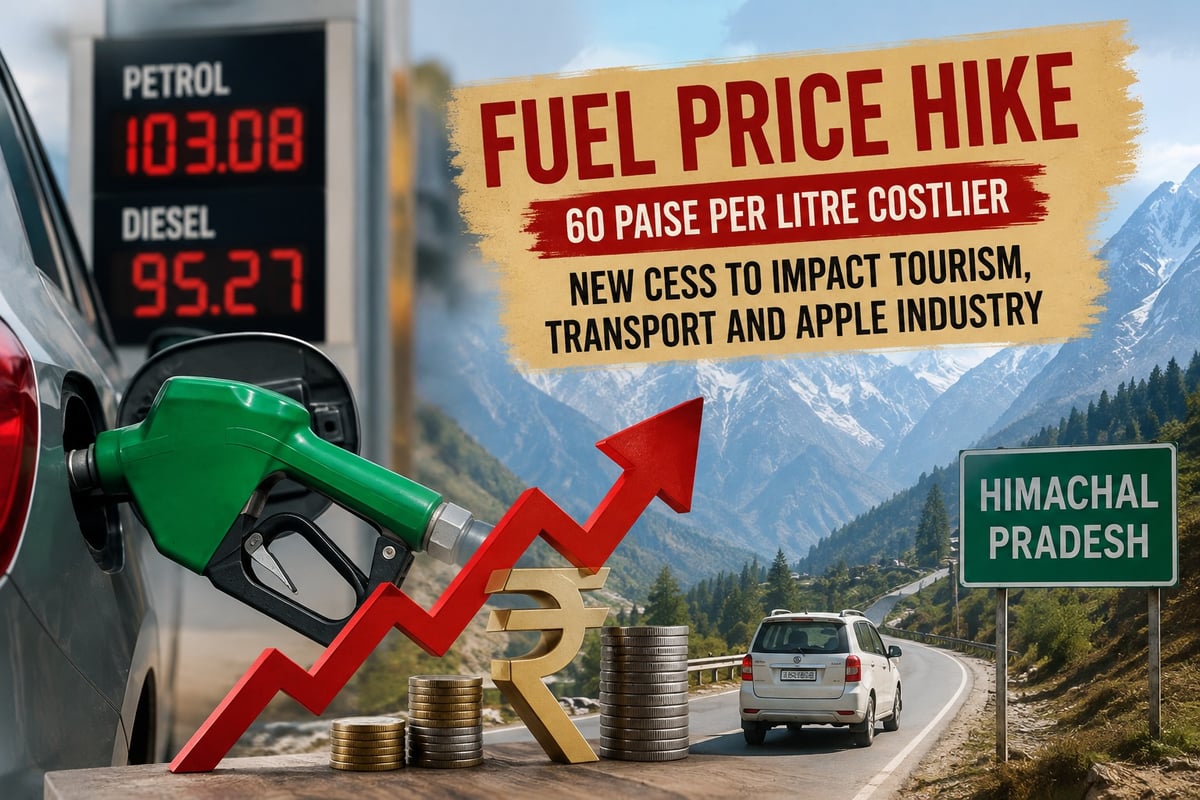
Himachal Pradesh government has increased the prices of petrol and high-speed diesel by 60 paise per litre after imposing a new Orphan and Widow Cess on fuel. The revised rates came into effect from midnight, and the move is expected to affect not only local consumers but also the state’s tourism and transport sectors.
Under the new rates, petrol in Shimla has risen from ₹102.48 to ₹103.08 per litre, while diesel has increased from ₹94.67 to ₹95.27 per litre. Tourists travelling to Himachal Pradesh from neighbouring states such as Haryana, Punjab, and Chandigarh will now have to bear higher fuel expenses, making hill travel slightly more expensive.
According to the state government, the cess has been introduced to increase revenue for welfare schemes meant for orphaned children and widows. The additional funds collected through the levy will be used for various social welfare programs being run by the state.
A notification issued by the State Taxes and Excise Department stated that the cess will be imposed at the time of the first sale of petrol and diesel within Himachal Pradesh. The decision has been taken under Section 6-A of the Himachal Pradesh Value Added Tax (HPVAT) Act, 2005.
Tourism Sector May See Ripple Effect
The fuel price hike is likely to have a wider economic impact on Himachal Pradesh’s tourism industry, which attracts between 1.25 crore and 1.75 crore tourists annually. Estimates suggest that visitors to the state purchase fuel worth nearly ₹225 crore every year. With the new cess in place, overall travel and transportation costs are expected to increase further.
Industry experts believe that the rise in fuel prices could lead to higher taxi and bus fares, affecting both tourists and local commuters.
Apple Industry Also Faces Higher Transport Costs
The decision may also hit Himachal Pradesh’s ₹5,500-crore apple industry, especially as the apple season is currently at its peak. Since trucks are the primary mode of transporting apples from orchards to markets, the increase in diesel prices is expected to raise transportation costs, potentially affecting growers, traders, and overall supply-chain expenses.
The fuel cess is being viewed as a revenue-generating measure with a welfare objective, but its economic impact is expected to be felt across key sectors that are heavily dependent on transportation, particularly tourism and horticulture.