Punjab Newsline | New Delhi
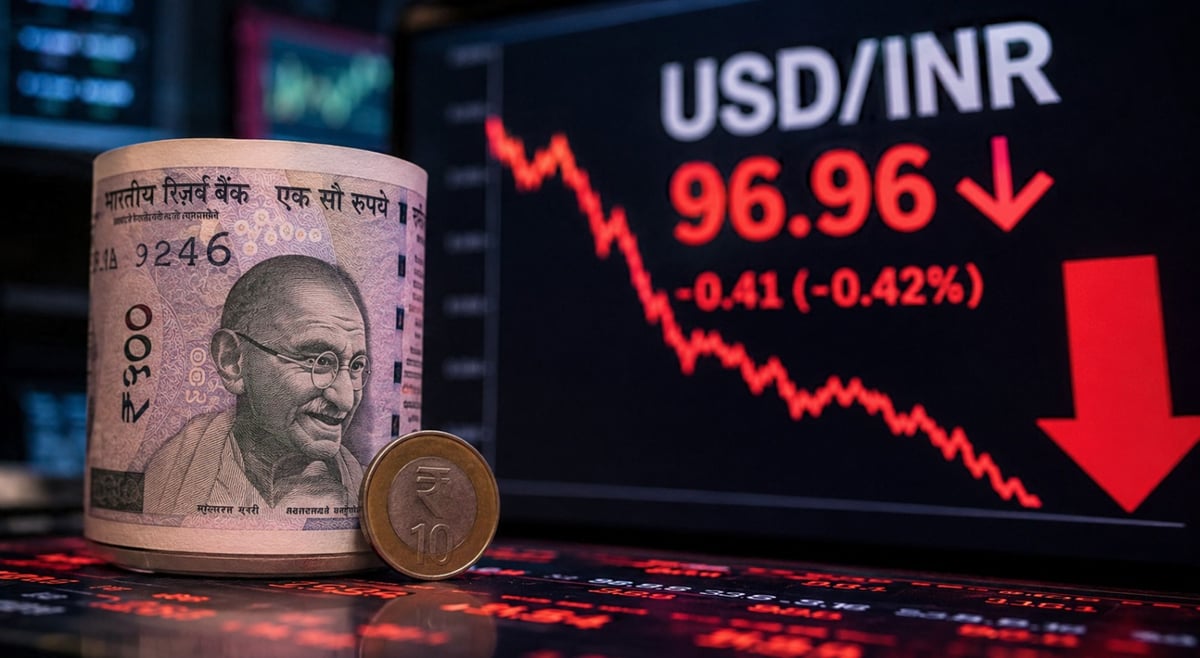
The Indian rupee witnessed another sharp fall against the US dollar on Wednesday, declining nearly 0.3 percent in early trade. The rupee opened at 96.86 per dollar and slipped further by 41 paise to touch 96.96 during initial trading hours, bringing it dangerously close to the psychological 97 mark.
The continuous decline has triggered concern among investors, importers, and common citizens alike, as the rupee has now become one of the weakest-performing currencies in Asia this year.
Asia’s Weakest Currency in 2026
The rupee has reportedly declined around 1.5 percent so far this month and more than 7 percent in 2026, making it Asia’s worst-performing currency this year.
Analysts warn that the situation remains fragile as rising oil prices could further increase India’s import bill and widen the current account deficit.
The prolonged US-Iran tensions have kept crude oil prices elevated globally. As India imports a large portion of its energy requirements, higher oil prices directly increase the country’s import costs.
Economists fear this could significantly widen India’s current account deficit in the current financial year. Concerns are also growing over weaker foreign investment inflows and possible impacts on remittances from the Middle East.
Why Is the Rupee Falling?
Market experts say continuous selling by Foreign Institutional Investors (FIIs) is one of the major reasons behind the rupee’s weakness. Foreign investors have been pulling money out of Indian markets, increasing pressure on the domestic currency.
Another major factor is India’s heavy dependence on crude oil imports. Due to ongoing geopolitical tensions and rising international crude prices, India is spending more dollars on oil purchases, weakening the rupee further.