Punjab Newsline | Chandigarh
Punjab has scripted a new chapter in India’s education sector by emerging as one of the country’s best-performing states in school education. In the NITI Aayog Education Quality Report 2026, Punjab has overtaken Kerala — long regarded as India’s benchmark in school education — on several key foundational learning indicators. The achievement has brought national recognition to Punjab’s government schools and their remarkable transformation in recent years.
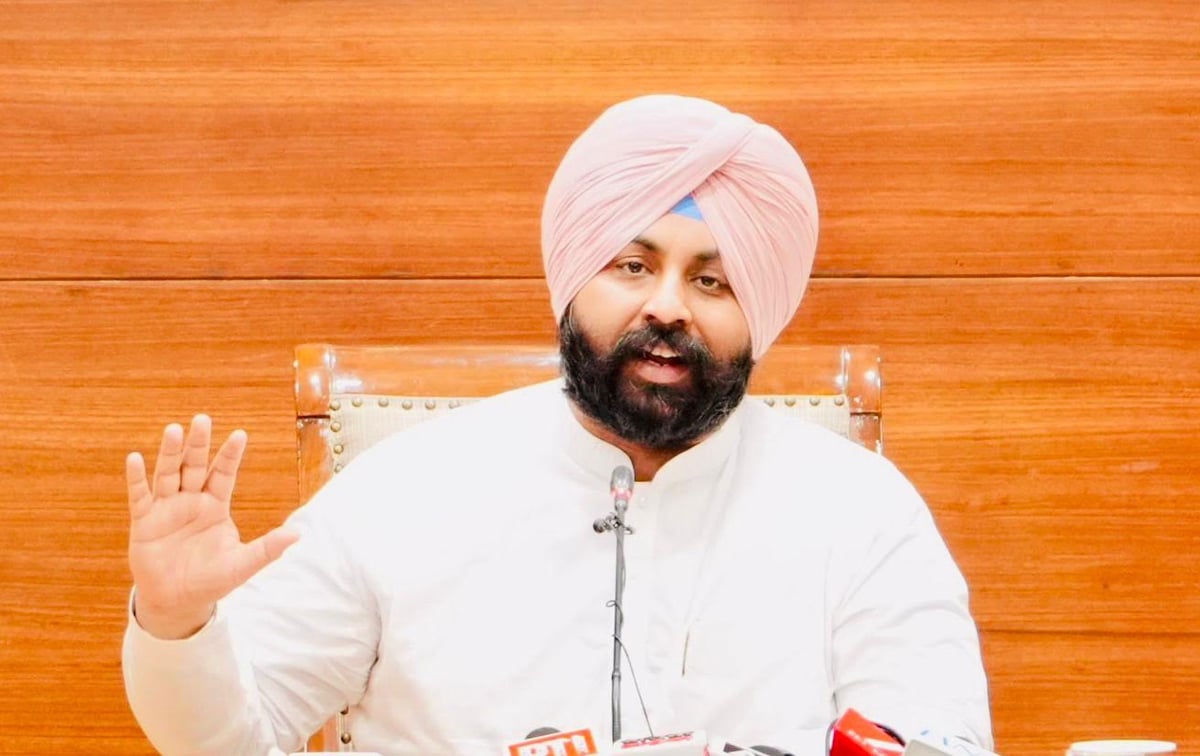
Punjab Education Minister Harjot Singh Bains described the achievement as the beginning of “Punjab’s Era” driven by strong reforms and grassroots dedication. He said the success belongs to every teacher, student, and parent who continued to believe in government schools. According to him, the transformation is the result of consistent policy reforms, clear intent, and effective implementation on the ground.
As per the report, Punjab recorded 82 percent proficiency in language and 78 percent in mathematics for Class 3 students, outperforming Kerala, which scored 75 percent and 70 percent respectively. In Class 9 mathematics as well, Punjab achieved 52 percent proficiency compared to Kerala’s 45 percent. The minister credited the state government’s post-pandemic education reforms, including Mission Samarth and the Schools of Eminence programme, for bringing about this historic turnaround.
Under the leadership of Chief Minister Bhagwant Mann, Punjab has significantly upgraded school infrastructure across the state. Nearly all government schools now have electricity, functional computers, and smart classrooms. Dropout rates have also declined sharply, with more than 90 percent of Class 10 students continuing their studies in Class 11.
The NITI Aayog report also praised Punjab for successfully reducing the urban-rural education gap and ensuring equal learning opportunities for village students and girls. Government school students from Punjab are now performing exceptionally well in national competitive examinations. So far, 786 students from government schools have cleared JEE Main, while 1,284 students have qualified for NEET, showcasing the growing strength of Punjab’s public education system.
The state’s investment in global teacher training programmes in countries like Finland and Singapore, along with the recruitment of thousands of teachers and the launch of the English Edge Programme, has further strengthened Punjab’s education model. The report has now validated what people in Punjab have already begun witnessing on the ground — government school students are no longer catching up; they are leading the way.