Punjab Newsline | Chandigarh
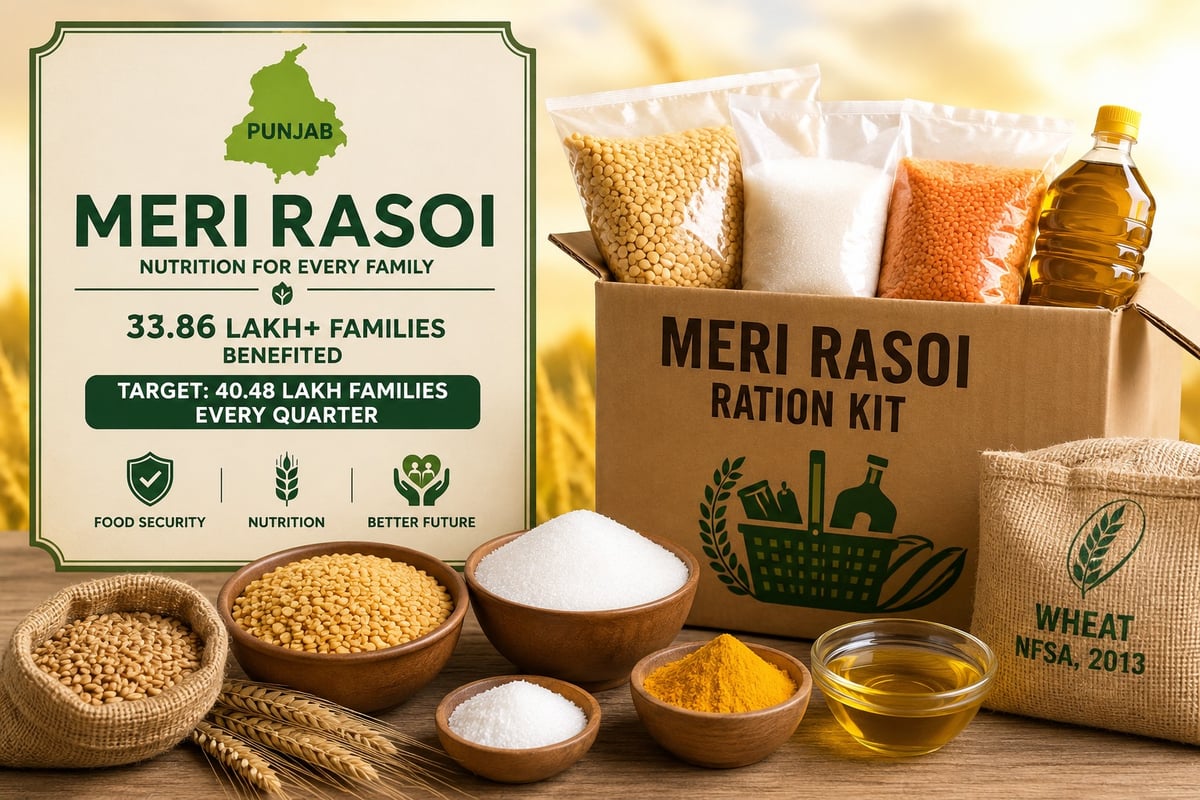
Punjab Government has intensified its flagship ‘MERI RASOI’ ration kit distribution drive, with more than 33.86 lakh families already benefiting from the initiative aimed at strengthening food and nutritional security for vulnerable households across the state.
The drive is being implemented on a mission mode under the guidance of Chief Minister Bhagwant Singh Mann and Food, Civil Supplies and Consumer Affairs Minister Lal Chand Kataruchak. The government has set a target of covering 40.48 lakh eligible families every quarter (three months).
Under the scheme, each beneficiary family receives one ration kit containing 2 kg lentils, 2 kg sugar, 1 kg salt, 200 grams turmeric powder and 1 litre mustard oil for monthly consumption. The kits are being distributed in addition to the wheat supplied under the National Food Security Act (NFSA), 2013.
The ration kits are assembled by Markfed, while the Food, Civil Supplies and Consumer Affairs Department oversees the distribution network across Punjab.
According to official figures, Ludhiana has recorded the highest distribution with 3,86,692 ration kits, followed by Amritsar (2,66,112), Patiala (2,37,320), Gurdaspur (2,09,040), Jalandhar (1,95,614) and Bathinda (1,94,449).
Other districts with substantial distribution include Hoshiarpur (1,84,140), Sangrur (1,66,102), Fazilka (1,65,364), Tarn Taran (1,61,253), Sri Muktsar Sahib (1,42,995), Ferozepur (1,29,673), Moga (1,23,321) and Mansa (1,00,371).
Officials said the objective of the scheme is to supplement staple grains with proteins, cooking oil and essential spices, thereby improving the overall nutritional intake of low-income families.
The distribution process is being closely monitored to ensure transparency, prevent duplication and guarantee last-mile delivery. District administrations, departmental officials and local authorities are coordinating to ensure that all eligible beneficiaries receive their entitlement.
Punjab Government said the scheme reflects its commitment to ensuring that no eligible family is left without food security, while simultaneously addressing both hunger and nutrition concerns across the state.