Punjab Newsline | New Delhi
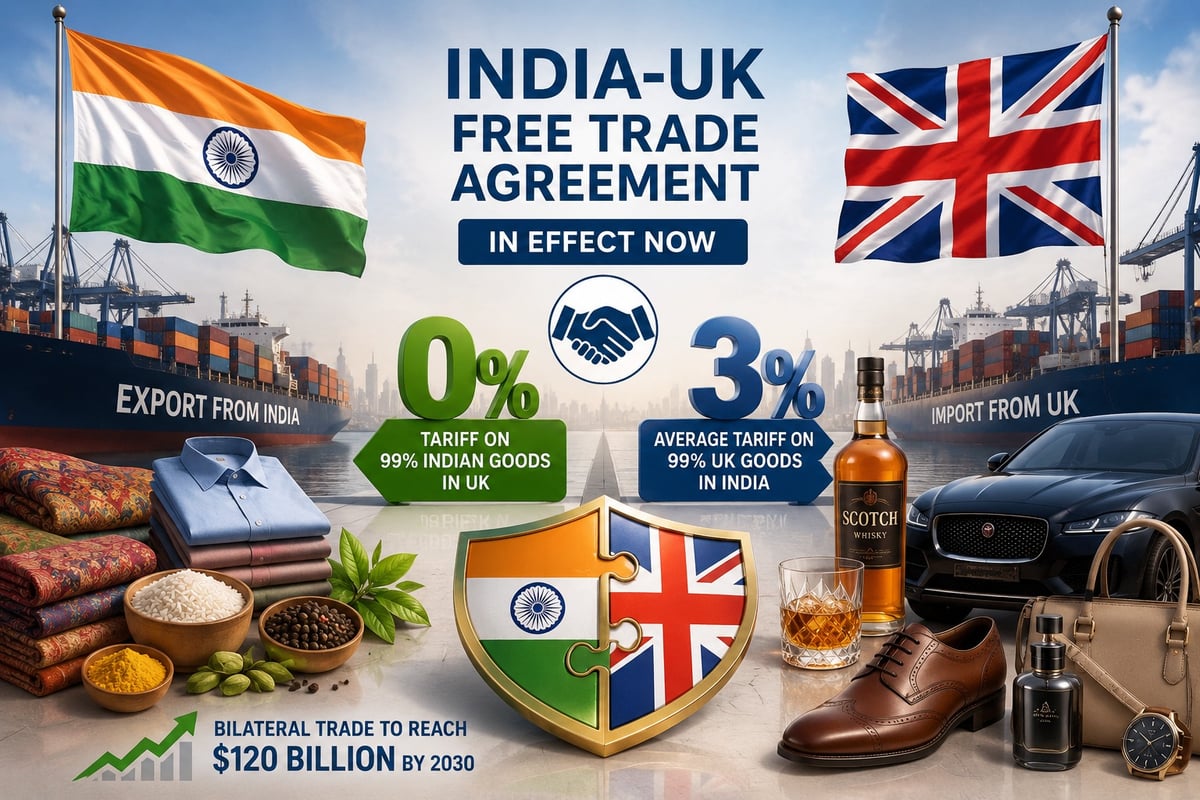
India-UK Free Trade Agreement (FTA) officially came into effect on Tuesday, marking a major milestone in economic ties between the two countries. The agreement is expected to make several British products including luxury cars, Scotch whisky, apparel, footwear, cosmetics, and premium food items significantly cheaper in India, while giving Indian exporters duty-free access to the UK market.
Under the agreement, 99% of Indian goods will now enjoy zero-tariff access to the UK, while around 99% of UK products will be imported into India at an average tariff of just 3%. The deal is expected to double bilateral trade to nearly $120 billion by 2030.
The agreement was signed on July 24, 2025, after nearly three years of negotiations spanning 14 rounds. Commerce Minister Piyush Goyal and UK Business and Trade Secretary Jonathan Reynolds signed the pact in the presence of Prime Minister Narendra Modi and UK Prime Minister Keir Starmer.
Ahead of its implementation, UK High Commissioner to India Lindy Cameron described the agreement as a "historic moment" on social media platform X, saying it would usher in "a new era of growth" for both economies.
What Gets Cheaper in India?
Scotch whisky and gin: Import duty slashed from 150% to 75%, with a further reduction to 40% by the tenth year of the agreement. A bottle priced at ₹5,000 could now cost around ₹3,500.
Cosmetics, medical devices, and aerospace parts: Tariffs will decline from around 15% to 3%, making these products cheaper.
Luxury cars: Tariffs on UK-made vehicles such as Jaguar Land Rover and Rolls-Royce will fall from around 100% to 10% under a quota system, potentially reducing prices by 20–30%.
Fashion and lifestyle products: Branded clothing, footwear, homeware, furniture, and electronics from the UK are expected to become more affordable.
Food and beverages: Lower duties on salmon, lamb, chocolates, biscuits, and soft drinks will reduce retail prices.
Major Boost for Indian Exports
The FTA is expected to provide a strong push to India's export sectors:
Textiles and home furnishings: UK import duties of 8–12% on Indian garments, bed linen, curtains, and home textiles have been eliminated, making Indian products more competitive against Bangladesh and Vietnam. Export hubs such as Tiruppur, Surat, and Ludhiana could witness up to 40% growth over the next three years.
Pharmaceuticals: Indian generic drug manufacturers will benefit from a simplified registration process, enabling quicker approvals and easier access to the UK's National Health Service (NHS).
Agriculture and seafood: Import duties on Basmati rice, premium tea, spices, and seafood including shrimp have been removed, benefiting exporters from Assam, Gujarat, Kerala, and West Bengal.
Chemicals: Reduced tariffs on agrochemicals, plastics, and specialty chemicals are expected to strengthen exports from Gujarat and Maharashtra, with India targeting a doubling of chemical exports to the UK by 2030.
Jewellery and leather goods: Indian jewellery, handbags, footwear, and leather products will now enter the UK duty-free, providing a major boost to MSMEs and luxury brands.
Engineering goods and auto components: The UK has removed import duties on Indian machinery, engineering tools, and automobile parts, strengthening industrial supply chains linking India, the UK, and Europe.
Clean Energy Collaboration
Beyond trade, the agreement is expected to deepen cooperation in renewable energy through joint ventures in solar power, green hydrogen, and electric vehicle (EV) infrastructure. Increased UK investment in India's clean energy sector is also expected to accelerate technology development and innovation.