Punjab Newsline | Chandigarh
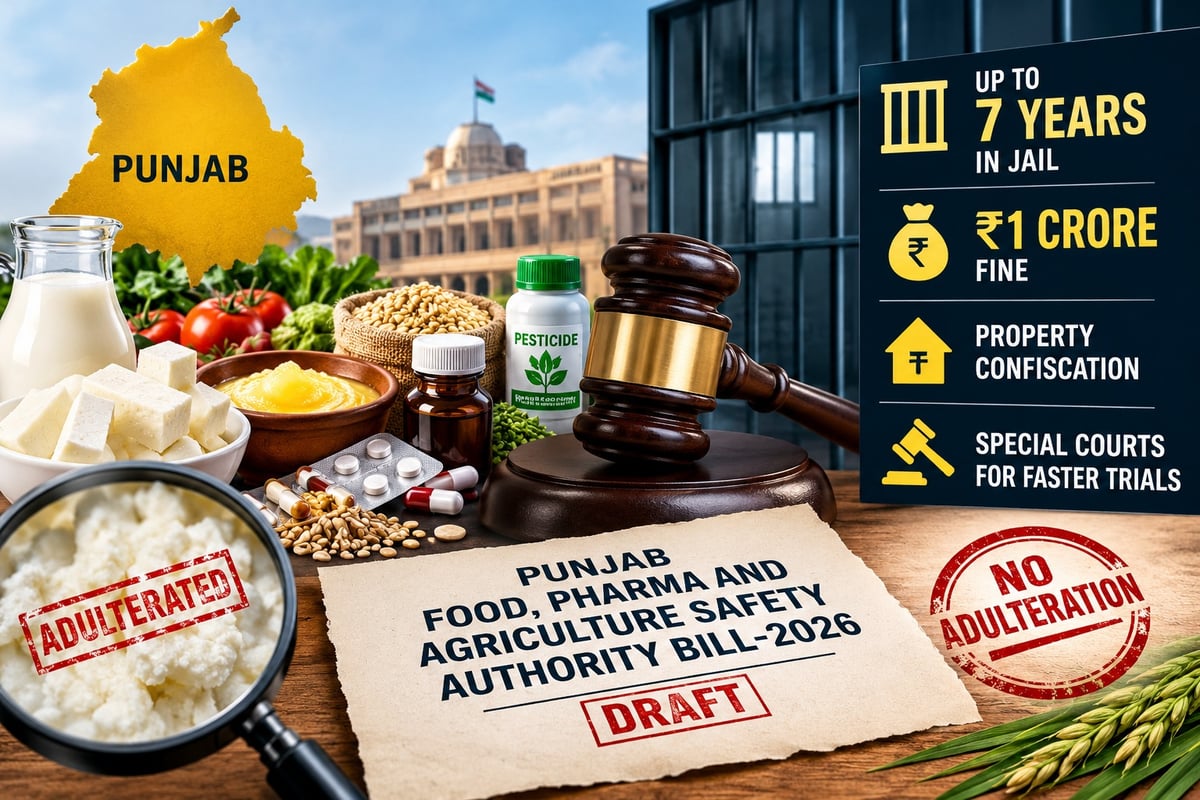
Punjab is preparing to introduce a stringent legal framework to crack down on large-scale adulteration in food products, medicines and agricultural inputs. A draft bill proposes imprisonment of three to seven years, fines of up to ₹1 crore and confiscation of the property of those found guilty of serious adulteration offences.
The draft of the Punjab Food, Pharma and Agriculture Safety Authority Bill-2026 has been sent to Chief Minister Bhagwant Singh Mann for consideration. Its authors have urged the state government to introduce the proposed legislation during the upcoming session of the Punjab Assembly. However, the bill remains at the proposal stage and has not yet become law.
The draft has been prepared by retired former Special Chief Secretary KBS Sidhu and Ludhiana-based environmental activist Colonel Jasjit Singh Gill (retd). It seeks to strengthen enforcement against organised adulteration and address gaps in the existing regulatory system.
Under the proposed provisions, fines could extend up to three times the value of the adulterated goods, while offenders could also face property confiscation. Cases involving large-scale and organised adulteration are proposed to be classified as non-bailable and non-compoundable offences. The draft also recommends setting up special courts to ensure faster trials.
Adulterated Food, Fake Seeds and Substandard Medicines Under Scanner
The proposed legislation identifies adulterated paneer and ghee, milk produced using chemicals, animal feed contaminated with aflatoxins, counterfeit pesticides and seeds, and substandard medicines as serious threats to public health and farmers' interests.
According to the authors, the adulteration business has evolved into an organised operation involving manufacturing units and supply chains spread across multiple states. They have pointed to inadequate coordination among the health, agriculture, animal husbandry and drug control departments, delays in laboratory testing and low conviction rates as major challenges in tackling the menace.
The draft's authors have also raised concerns that large-scale adulterators often manage to escape punishment, while small shopkeepers and sweet manufacturers are more likely to face enforcement action.
State-Level Authority and District Units Proposed
To improve coordination and accountability, the draft recommends establishing a state-level authority headed by the Chief Secretary. District-level units led by Deputy Commissioners-cum-District Magistrates have also been proposed.
These bodies would coordinate enforcement activities across departments and review decisions taken at the district level, helping ensure a more coordinated response to cases of adulteration.
Relief Measures for Small Businesses
Alongside stricter penalties, the draft proposes measures to help small businesses comply with safety requirements. These include free registration for small traders, a 60-day window to meet the prescribed rules and a 70 per cent government subsidy on laboratory testing expenses.
It also recommends limiting the maximum fine to ₹20,000 in cases where the product is not found to be unsafe.
If approved and enacted, the proposed legislation would establish a tougher framework against organised adulteration while offering smaller businesses financial assistance and time to comply with safety standards. The final provisions will depend on the government's consideration and the legislative process.