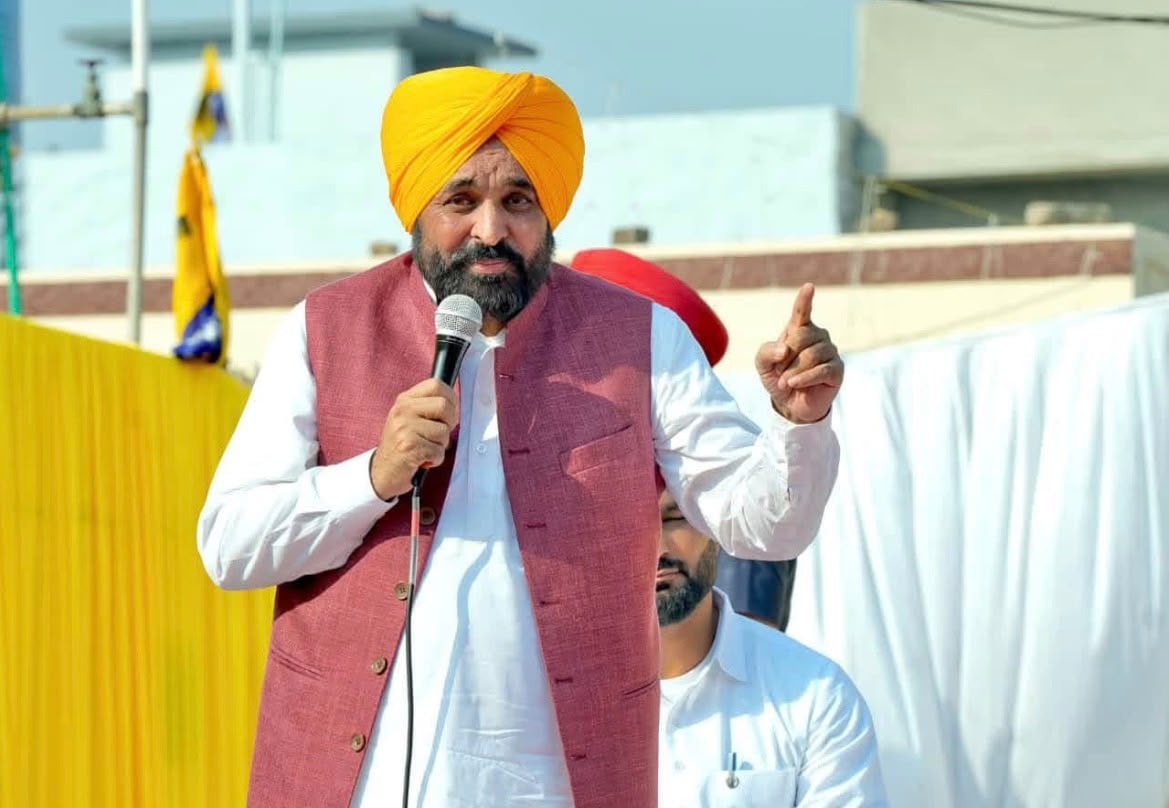
Punjab Newsline | Jalandhar
Punjab Chief Minister Bhagwant Singh Mann on Wednesday reiterated that all major welfare schemes, including free bus travel for women, ₹1,000 monthly financial assistance for women, free electricity and ₹10 lakh health coverage, would continue as long as the Aam Aadmi Party (AAP) government remained in power in the state.
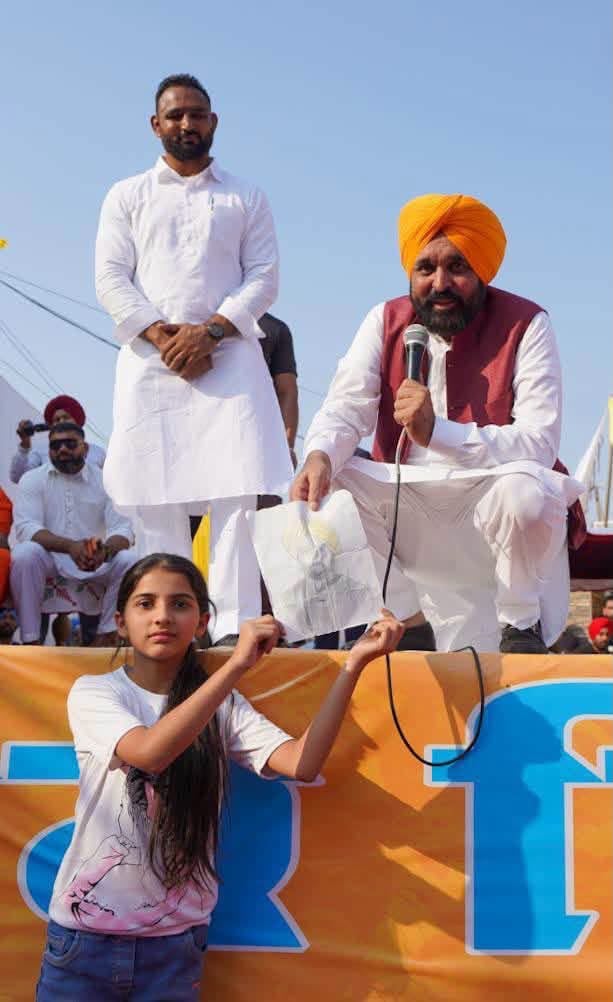
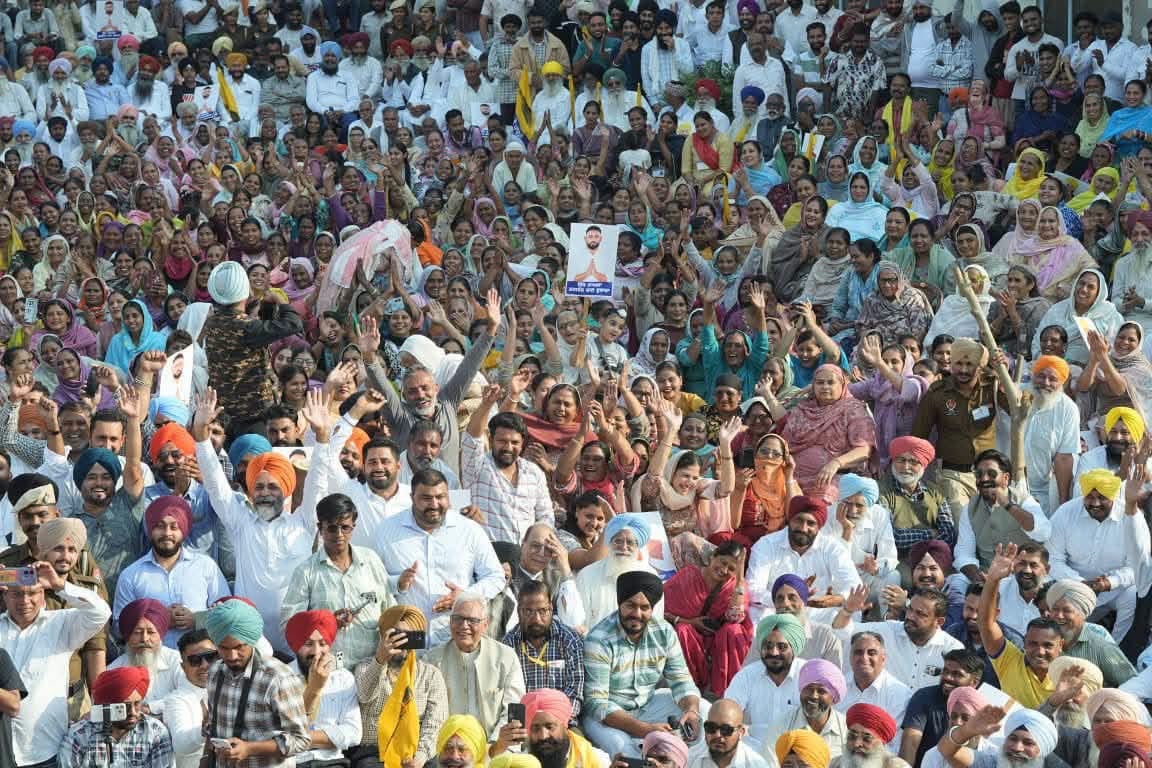
Addressing people during a Lok Milni program at Donewal in Jalandhar, Mann said public welfare and development remained the government's key priorities. He also launched a scathing attack on the BJP, Congress and Shiromani Akali Dal (SAD), accusing them of exploiting Punjab and its resources during their decades in power.
The Chief Minister said the AAP government had brought transparency in recruitment and accelerated development across the state. He claimed that more than 71,000 youngsters had secured government jobs without corruption.
Targeting the Akali Dal, Mann accused its leadership of patronising the drug trade during its tenure and alleged that the party had exploited the state's resources for personal gains. He also raised the issue of sacrilege of Sri Guru Granth Sahib and criticised the Akali leadership over its handling of Sikh religious institutions.
Taking a dig at the Congress, Mann described the party as a divided house and alleged that it had no clear vision for Punjab. He also criticised former Chief Minister Charanjit Singh Channi's ongoing cycle yatra, claiming that it had failed to generate significant public support.
Attacking the BJP, Mann alleged that the party had contributed to the drug problem in Punjab during its alliance with the Akalis and questioned its current promises of making the state drug-free.
He further questioned the possibility of an Akali Dal-BJP alliance, pointing out that the Akali leadership had earlier accused the BJP of interfering in Sikh religious affairs but was now seeking an alliance with the party.
Highlights welfare initiatives
Listing the government's achievements, Mann said more than 90 per cent of households in Punjab were receiving free electricity. He added that farmers were now getting electricity during daytime hours.
He said the government had also closed several toll plazas, resulting in savings of around ₹70 lakh daily for commuters. Other initiatives included improved roads, better healthcare facilities, education reforms and infrastructure development.
The Chief Minister said grants were being provided for village development and 3,100 sports stadiums were being constructed across Punjab to encourage youngsters to participate in sports and stay away from drugs.
On the Mukh Mantri Sehat Yojna, Mann said the scheme provides cashless medical treatment of up to ₹10 lakh to every resident family in Punjab.
He also highlighted the Mawan Dheeyan Satkar Yojna, under which eligible women above 18 years of age will receive monthly financial assistance of ₹1,000, while Scheduled Caste women will receive ₹1,500. He said beneficiaries were being informed through mobile notifications and the money was being transferred directly into their bank accounts. Women already receiving social security pensions would also be eligible.
Government schools show improvement, claims Mann
Emphasising education as a key instrument for social transformation, Mann said the government had introduced initiatives such as Schools of Eminence and teacher training programs.
He claimed that the number of government school students qualifying for the NEET examination had increased from 80 in 2021 to 882 in 2026.
Speaking about agriculture, the Chief Minister said canal water utilisation in Punjab had increased from nearly 22 per cent before his government assumed office to around 85-86 per cent. He said the government was working to raise it to 90 per cent to ensure better irrigation facilities for farmers.
Mann further said Punjab was expected to contribute around 200 lakh metric tons of rice to the national pool this year, against an earlier estimated production of 180 lakh metric tons.
He asserted that public money was being spent on schools, hospitals, roads and other development projects, adding that the government's focus was to ensure that the benefits of governance reached ordinary families.