Punjab Newsline | New Delhi
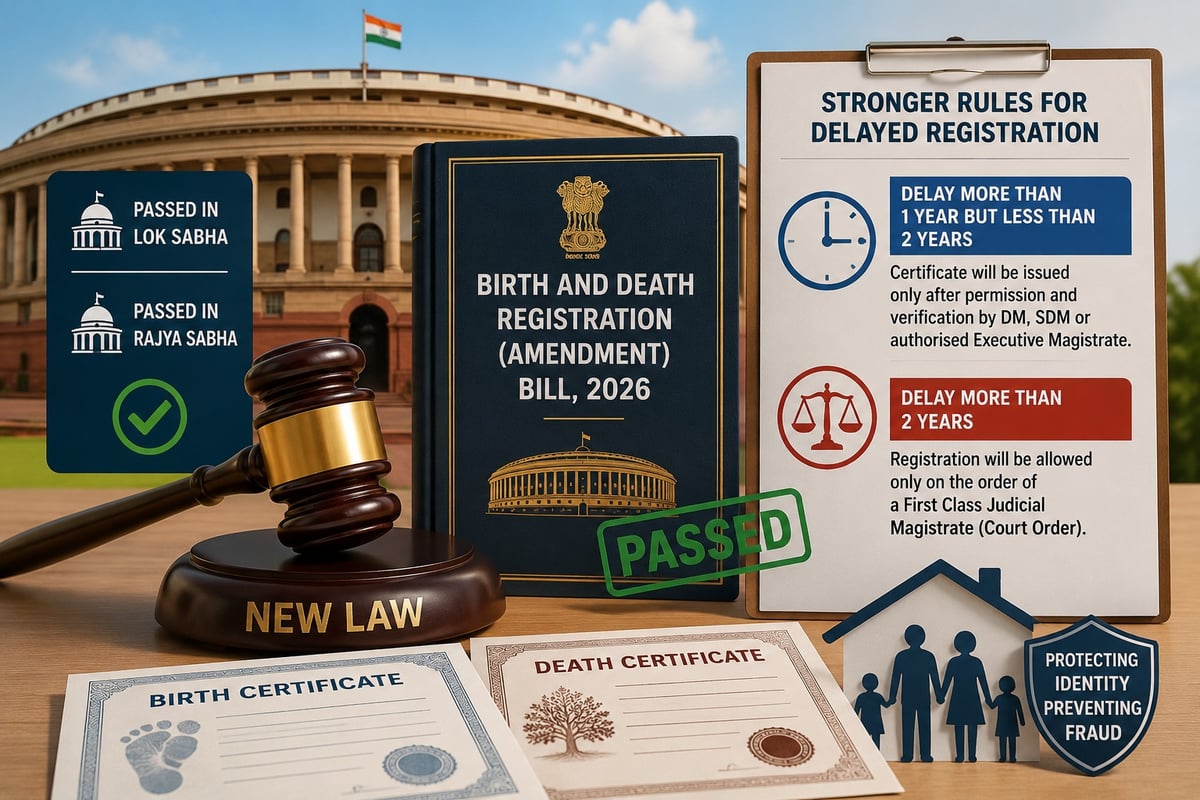
As Parliament continues its Monsoon Session, the Birth and Death Registration (Amendment) Bill, 2026 has emerged as one of the key legislations passed during the session. The Bill has now been approved by both the Lok Sabha and the Rajya Sabha, bringing important changes to the registration process for birth and death certificates across the country.
The amendment modifies provisions of the Registration of Births and Deaths Act, 1969, with the government stating that the new rules are aimed at preventing fraud, fake identity documents, and misuse of delayed registrations.
What has changed?
Under the new law, the process for obtaining a birth or death certificate will depend on how late the registration is filed.
If the delay is more than one year but less than two years
The certificate can now be issued only after permission and verification by the District Magistrate (DM), Sub-Divisional Magistrate (SDM), or an authorised Executive Magistrate.
If the delay is more than two years
The registration will require an order from a First Class Judicial Magistrate, meaning the matter will have to go through court verification instead of routine administrative approval.
Why is the government tightening the rules?
The government has said that delayed registrations have sometimes been used to obtain fraudulent documents and false identities. By introducing mandatory inquiries and judicial scrutiny in older cases, authorities hope to improve the accuracy and credibility of official records.
Why is this important for families?
Birth and death certificates are essential for:
school admissions,
passports,
Aadhaar and other identity documents,
inheritance and property claims,
insurance settlements,
pension benefits, and
access to various government schemes.
A delay in registration could now result in additional verification, administrative inquiries, and even court proceedings, making timely registration far more important than before.
What should citizens do now?
Families are advised to register every birth and death as soon as possible to avoid complications under the amended law. Experts say the new provisions will particularly affect cases where certificates are sought years after the actual event occurred, as such applications will now face stricter scrutiny and longer procedures.
With the Bill cleared by both Houses of Parliament, the new framework is expected to strengthen India’s civil registration system and reduce the chances of fraudulent or incorrect birth and death records.