Punjab Newsline | New Delhi
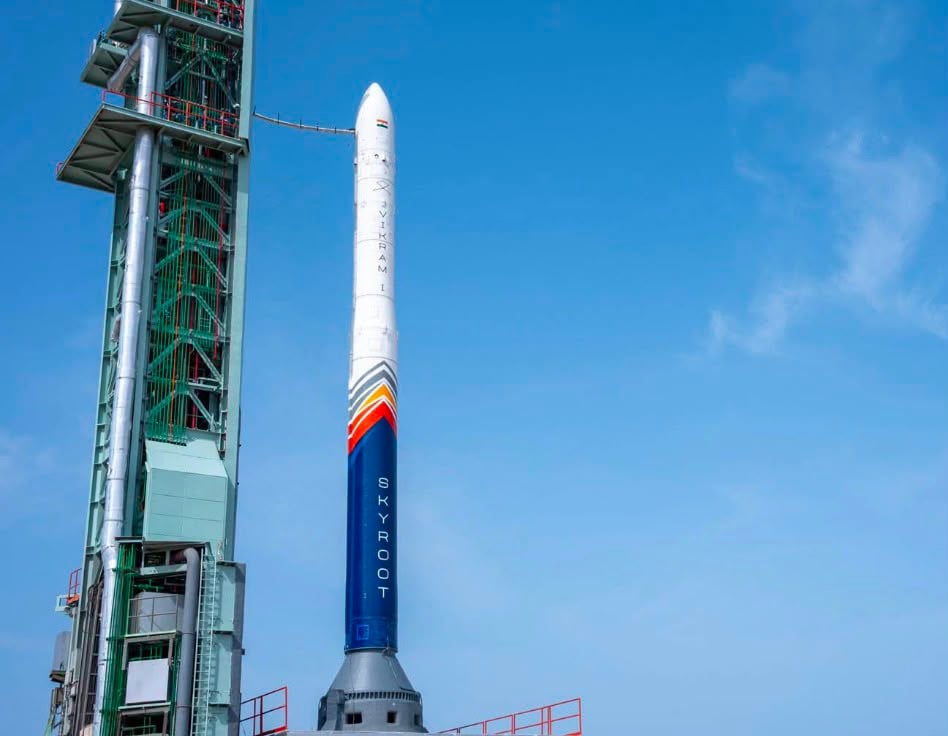
India marked a major milestone in its space journey on Saturday with the launch of Vikram-1, the country's first privately developed orbital rocket, from the Satish Dhawan Space Centre in Sriharikota, Andhra Pradesh. The launch, initially scheduled for 11:30 a.m., was briefly halted just before liftoff due to technical checks before successfully resuming.
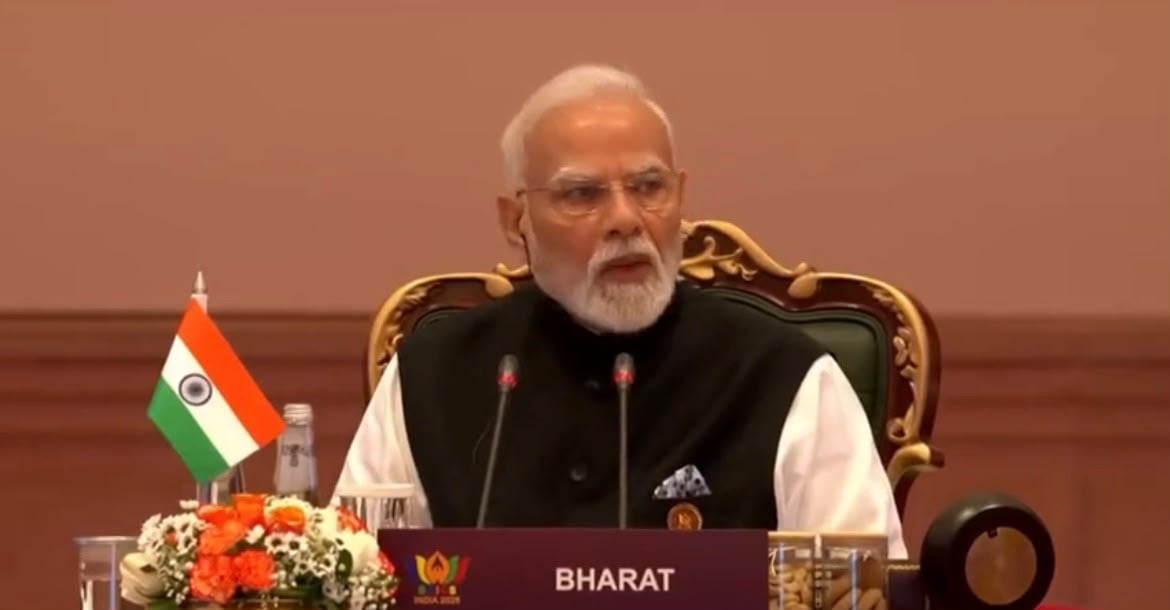
Prime Minister Narendra Modi congratulated Skyroot Aerospace on the achievement, calling it a "historic new frontier" in India's space journey. He said the successful mission reflects the talent, innovation, and entrepreneurial spirit of India's youth.
Named in honor of Dr. Vikram Sarabhai, the father of India's space programme, Vikram-1 is a 24-meter-tall orbital-class launch vehicle designed specifically for deploying small satellites into orbit.
The rocket features a lightweight carbon-composite structure, making it significantly lighter while maintaining high strength and efficiency. According to Skyroot Aerospace, carbon fiber is nearly five times lighter than the strongest steel, improving the rocket's overall performance.
Vikram-1 is powered by three solid-propulsion stages and is equipped with an Orbital Adjustment Module (OAM) at the top. The module enables the rocket to place multiple satellites into different orbits during a single mission, enhancing its commercial capabilities.
The launch vehicle is designed to carry payloads of up to 350 kilograms into a 450-kilometre Low Earth Orbit (LEO), making it suitable for the rapidly growing small satellite market.
The mission is being viewed as a landmark moment for India's private space sector. Until now, orbital satellite launches in India have largely been carried out by the Indian Space Research Organisation (ISRO). A successful Vikram-1 mission would pave the way for private Indian companies to independently offer commercial launch services.
Rajesh Jothi, Technical Director at IN-SPACe, said the mission has the potential to strengthen India's position in the global market for small satellites and launch vehicles. He noted that private sector participation in India's space industry has accelerated significantly since the space sector reforms introduced in 2020.