Punjab Newsline | Chandigarh
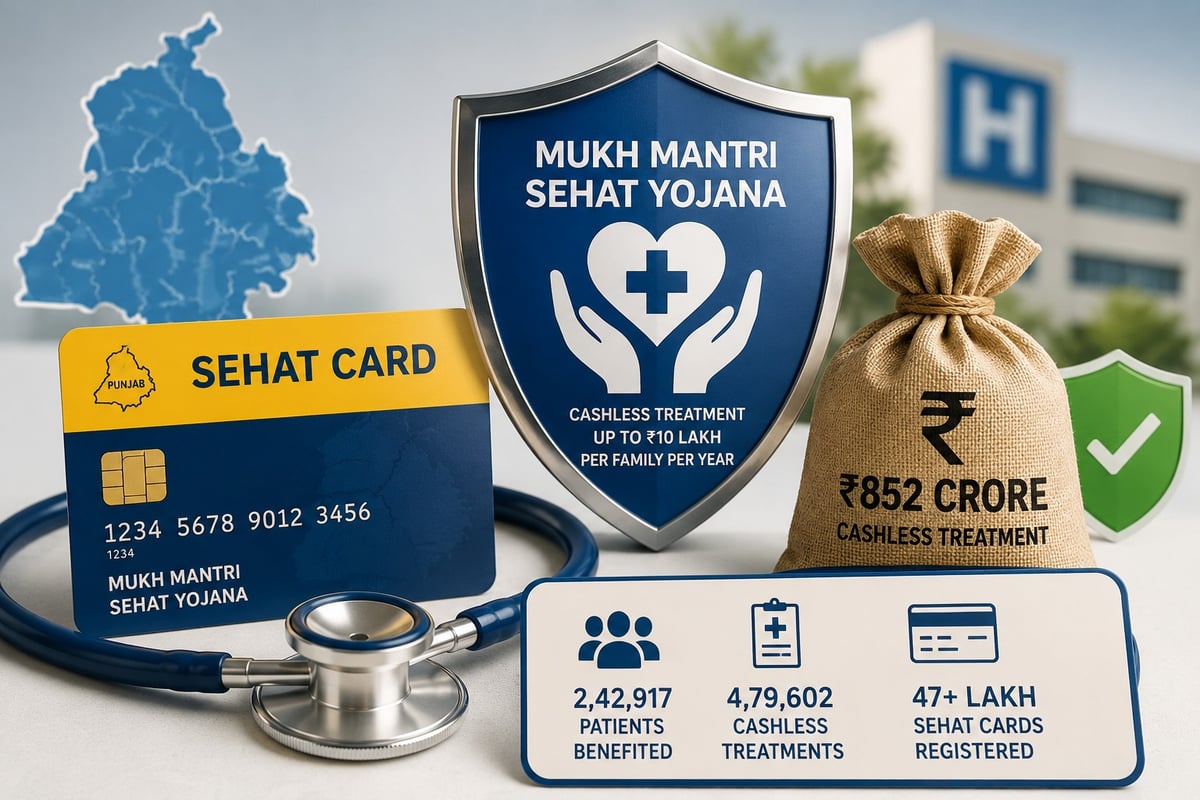
Punjab's flagship Mukh Mantri Sehat Yojana has provided cashless medical treatment worth approximately ₹852 crore to 2,42,917 patients in its first six months, making it one of the state's largest public healthcare initiatives.
Launched on January 8, the scheme has facilitated 4,79,602 cashless treatments while registering more than 47 lakh Sehat Cards, offering eligible households annual health insurance coverage of up to ₹10 lakh.
Punjab Health and Family Welfare Minister Dr. Balbir Singh said the initiative has significantly reduced the financial burden of medical treatment on families while improving access to quality healthcare.
According to the minister, chronic haemodialysis emerged as the most frequently availed service, with over 1.58 lakh dialysis sessions conducted under the scheme. Other major treatments included laparoscopic gallbladder surgeries, total knee replacements, Caesarean deliveries, normal deliveries, hysterectomies, hip replacements and general laparotomy procedures.
In terms of expenditure, primary total knee replacement accounted for the highest spending at around ₹70.86 crore, followed by cardiac stent procedures (PTCA with diagnostic angiogram) worth approximately ₹70.02 crore. Hip replacement, spinal surgeries, coronary artery bypass grafting (CABG), cataract surgeries, bilateral hernia repair and hysterectomy were also among the major procedures covered.
Dr. Balbir Singh said the treatment pattern reflects the scheme's ability to support both routine healthcare services and expensive specialised surgeries without any out-of-pocket expenditure for beneficiaries.
Several beneficiaries shared their experiences, saying the scheme enabled them to undergo life-changing treatments they could not otherwise afford. Patients from Sangrur, Patiala, Ludhiana and Fazilka credited the programme with helping them receive free surgeries for knee replacement, gallstones, appendicitis and kidney stones.
The Punjab Government said it will continue expanding the network of empanelled hospitals, increasing public awareness and simplifying registration to ensure more eligible families benefit from the scheme. Officials said the initiative remains central to the state's goal of achieving universal health coverage and ensuring no resident is denied medical care due to financial constraints.