Punjab Newsline | Chandigarh
A rare and life-threatening medical case has been reported by doctors at the Postgraduate Institute of Medical Education and Research (PGI), where a 20-year-old man was successfully treated after a turban pin he accidentally swallowed travelled into the muscle of his heart.
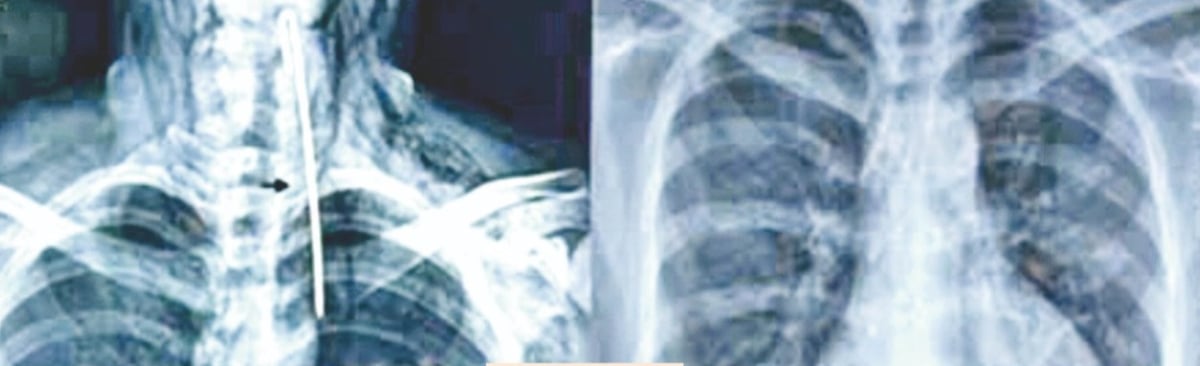
According to doctors, the youth had swallowed two metallic pins while tying his turban and later developed difficulty in swallowing. An X-ray revealed the presence of both pins. However, during endoscopy, doctors were able to locate and remove only one pin, while the second remained untraceable.
Further investigations using a high-resolution CT scan revealed that the missing pin had passed beyond the food pipe and migrated toward the membrane surrounding the heart. The sharp object was found with its tip near the left ventricle. Echocardiography later confirmed that the pin had become embedded in the heart muscle and had caused a small collection of blood around the heart, although it had not yet resulted in a life-threatening compression of the organ.
Given the risk of serious complications, doctors decided to perform immediate surgery. A team from PGI’s Department of Cardiothoracic and Vascular Surgery made a small incision between the sixth rib on the left side of the chest and successfully removed the 4-centimetre-long pin from the outer surface of the heart.
The patient recovered remarkably well after the operation. He did not require prolonged ventilator support and was breathing normally immediately after surgery. Antibiotics were administered to prevent infection, the chest drain was removed on the second postoperative day, and the patient was discharged from the hospital on the third day. Follow-up echocardiography showed normal heart function.
The rare case has been published in the January 2026 issue of the Indian Journal of Thoracic and Cardiovascular Surgery. The case report was authored by a team of six doctors, including Sanketh Adem, Tsering Sangdup, Krishna Prasad Gaurav and Akshay Kheni.
Medical experts said that cases involving sharp metallic objects migrating from the digestive tract to another organ are extremely uncommon. According to the doctors, this is the first reported case of a turban pin travelling through the food pipe and becoming lodged in the muscle of the heart’s left ventricle.
The doctors stressed that if a sharp object swallowed by a patient cannot be located during endoscopy, it should not be assumed that it has safely passed out of the body. Advanced imaging techniques such as X-rays, CT scans and echocardiography may be required to accurately determine its location.