Punjab Newsline | Chandigarh
By : Samriti Sharma
India's stock markets generally remain closed for regular trading on Diwali. However, the festival of lights is an exception to the usual market holiday, as the Bombay Stock Exchange (BSE) and the National Stock Exchange (NSE) open for a special one-hour session known as Muhurat Trading. The tradition allows investors to buy and sell shares during an auspicious period and marks the beginning of a new Hindu financial year.
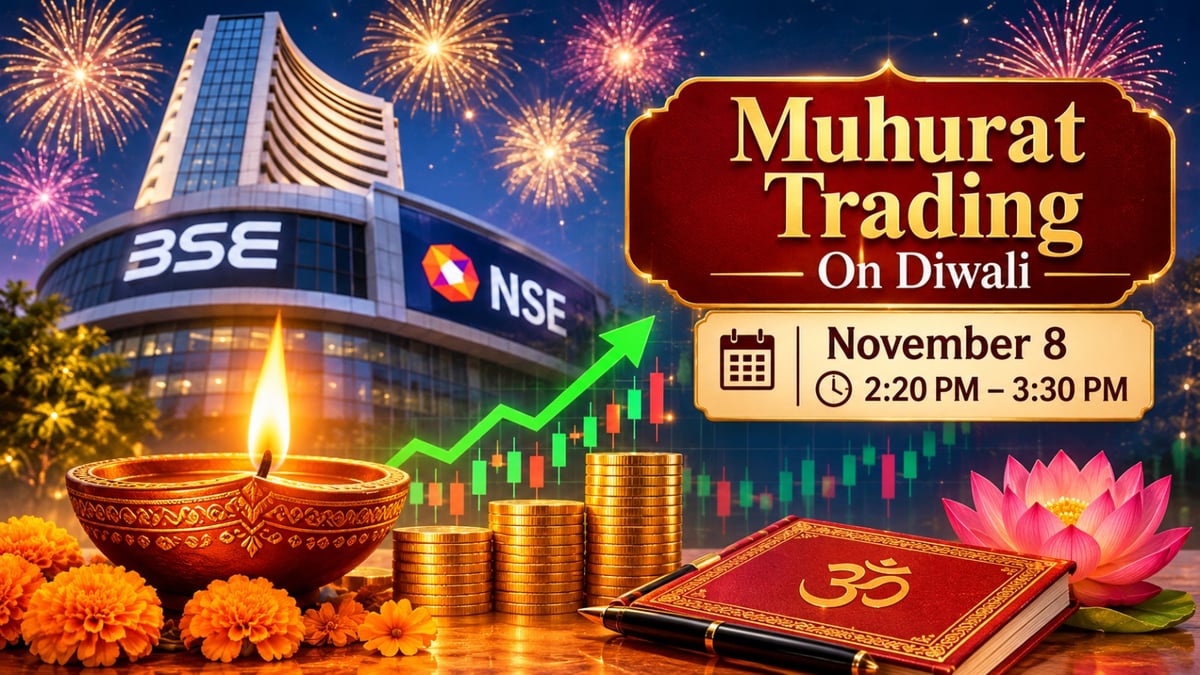
This year, Muhurat Trading will be held on November 8, with the main trading session scheduled from 2:20 pm to 3:30 pm. The pre-open session will begin at 2:05 pm.
During the pre-open session, investors can place initial buy and sell orders, while the exchange follows a process to determine the opening prices of stocks. The main session then allows participants to execute actual trades.
Why Is Muhurat Trading Considered Auspicious?
Muhurat Trading is not merely a symbolic market event. It reflects the long-standing Indian tradition of beginning new ventures and making investments during auspicious occasions.
Many investors believe that purchasing shares during the Diwali muhurat brings prosperity, good fortune and financial growth in the coming year. While some traders make small investments as a customary gesture, others actively participate in the session and execute genuine market transactions.
According to Deven Choksey, Managing Director of DRChoksey FinServ, the tradition is rooted in the age-old practice of purchasing something new during an auspicious muhurat.
On Diwali and Dhanteras, people traditionally buy new items, including books and precious metals, to invite prosperity into their homes. Stock market participants gradually extended this belief to investments, making share purchases during the auspicious trading window to welcome the new business year.
How Did the Tradition of Muhurat Trading Begin?
The connection between Diwali and the stock market goes back several decades. In earlier times, preparations for the festival were equally important at brokerage offices, where traders followed traditional rituals before beginning a new business year.
According to a report by The Economic Times, brokers would clean their offices on Dhanteras, purchase new accounting registers known as 'Chopdi' and organise their transaction books ahead of the new year.
This was followed by Lakshmi Puja and Chopda Pujan, during which account books were worshipped with the hope of prosperity and successful business in the coming year.
The report also mentions the experiences of veteran broker Priyakant Dalal of Dalal & Broacha Securities, who had been participating in such celebrations since 1955.
At that time, several brokerage offices were located around the Bombay Stock Exchange. Following the puja, brokers would visit one another's offices to exchange Diwali greetings. On Diwali, they would gather in the BSE's large trading hall for the special Muhurat Trading session.
However, Dalal's participation in these celebrations since 1955 does not establish that formal Muhurat Trading at the exchange began in that year.
Muhurat Trading at BSE Dates Back to 1957
According to the Bombay Stock Exchange, the tradition of conducting Muhurat Trading on Diwali dates back to 1957.
The exchange also highlighted the history of the tradition in its 2024-25 annual report, on page 22.
Investor and trader Harsh Vora, in an article published on Tickertape on October 26, 2021, also traced the beginning of Muhurat Trading at the BSE to 1957.
According to Vora, the special session is associated with the beginning of a new business year. Many investors purchase a small number of shares during this period as a symbolic gesture to welcome the year ahead.
While the BSE's annual report confirms 1957 as the starting point of the tradition, it does not identify who initiated the first session, who executed the first trade or which company's shares were purchased.
Is Muhurat Trading Only a Ritual or Does Real Trading Take Place?
Although Muhurat Trading carries strong cultural and religious significance, it is not simply a ceremonial event.
Actual buying and selling of shares take place during the special session, with investors, traders and market participants placing orders through their brokers.
Some investors use the occasion to make token investments, while others look for opportunities based on their market strategies. However, the auspicious timing does not guarantee profits, and investment decisions continue to involve market risks.
Over the decades, Muhurat Trading has evolved into a unique blend of tradition and modern financial activity. Even as India's stock markets have become increasingly digital, the annual Diwali session continues to attract investors who see it as an auspicious opportunity to welcome a new financial beginning.