Punjab Newsline | Chandigarh
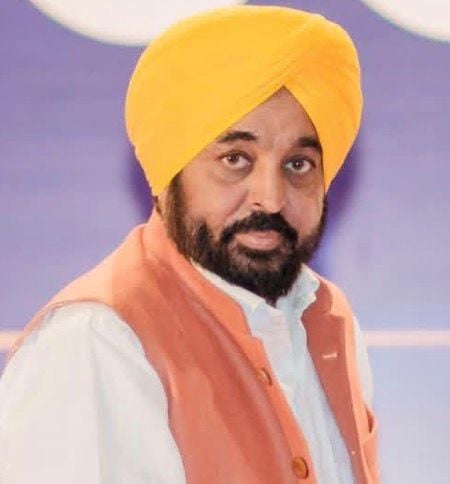
Punjab Chief Minister Bhagwant Singh Mann has strongly opposed the proposed Viksit Bharat Shiksha Adhiniyam Bill, 2025 (Higher Education Bill), alleging that the legislation would centralise control over higher education, increase financial burdens on students and weaken the role of states in shaping education according to local needs.
In a detailed letter to Union Education Minister Dharmendra Pradhan, Mann urged the Centre to reconsider the Bill and initiate wider consultations before implementing reforms that could significantly reshape the country's higher education system.
Calling education the foundation of India's future, the Chief Minister said higher education should remain accessible to children from farming, labour and middle-class families rather than becoming a privilege for the wealthy. He stressed that India’s progress depends on making higher education affordable, inclusive and research-oriented through greater public investment rather than increased regulation.
Mann said he was writing not only as Punjab’s Chief Minister but also as the representative of millions of parents whose aspirations are linked to their children's education. While he initially expected the Bill to strengthen quality and global competitiveness, he said a detailed study raised serious concerns about excessive centralisation of policy-making powers in the hands of the Union Government.
The Chief Minister argued that education is a subject in the Concurrent List of the Constitution and states must retain the flexibility to develop educational systems suited to their unique social and economic challenges. He warned that if key decisions are concentrated in Delhi, states could lose their ability to design skill programmes, industry collaborations and employment-oriented courses based on regional requirements.
Mann also questioned the move towards greater centralisation by citing concerns over the functioning of central agencies such as the National Testing Agency (NTA), saying recent controversies have raised questions about transparency and credibility.
Expressing concern over the financial implications of the Bill, the Chief Minister said the proposed framework does not clearly explain how universities will receive adequate funding if decision-making is centralised while state governments' roles diminish.
He warned that institutions may be forced to increase fees, expand self-financed courses and rely more heavily on private investment, making higher education unaffordable for ordinary families.
He further cautioned that the Bill could accelerate the privatisation of higher education by weakening public institutions and increasing dependence on private capital, ultimately affecting lakhs of students whose families make significant sacrifices to fund their education.
Urging the Union Government to withdraw the Bill in its present form, Mann called for a comprehensive review and a framework that grants greater authority and flexibility to states while increasing investment in universities, research, infrastructure and faculty development.
Referring to the goals of the National Education Policy 2020, he said India needs stronger educational institutions rather than additional layers of administrative control.
Reiterating his appeal, the Chief Minister said the dreams of ordinary families should remain at the centre of education policy, asserting that nations become great by investing in education and expanding opportunities, not by centralising control.