Punjab Newsline | Chandigarh
By : Samriti Sharma
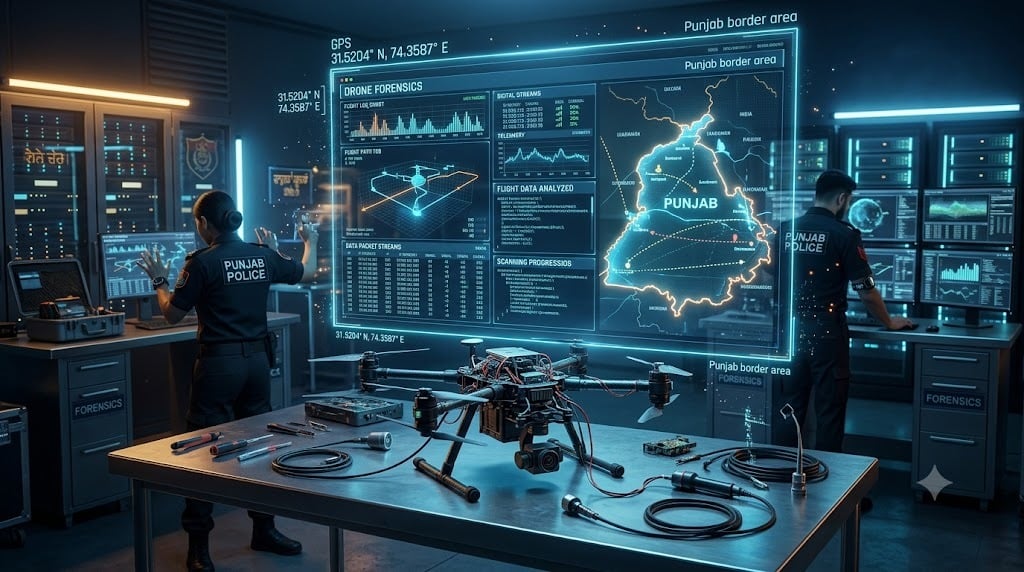
Punjab is gearing up to strengthen its fight against drone-assisted smuggling by introducing advanced forensic technology at four laboratories across the state. The proposed initiative, involving an estimated investment of ₹8.37 crore, aims to enhance the ability of investigating agencies to examine digital evidence recovered from drones suspected to have been used in cross-border smuggling, narcotics trafficking and other criminal activities.
Under the project, specialised drone forensic equipment will be installed at the Cyber Forensic Division in Mohali and Regional Forensic Science Laboratories in Amritsar, Ludhiana and Bathinda.
The move is expected to strengthen the state's forensic investigation infrastructure by enabling experts to scientifically examine recovered drones and their associated digital devices.
Drone Data to Provide Crucial Investigative Leads
Drones are not merely aerial devices; depending on their technical configuration, they can store valuable digital information, including flight history, GPS coordinates, camera recordings, controller activity and other operational details.
With specialised forensic equipment, investigators will be able to retrieve, preserve and analyse available information from recovered drones, flight controllers, storage systems and camera equipment.
These digital records could help establish the movement and operational history of a drone, including where it travelled and when it was active.
GPS Coordinates and Flight Logs Under Scanner
One of the key aspects of the proposed technology will be the examination of GPS records and flight logs.
Forensic experts will be able to analyse available location-related information, timestamps and other technical records that could provide important clues during investigations.
The findings can also be cross-verified with CCTV footage, mobile phone records, witness statements and other evidence to develop a more comprehensive picture of suspected drone-related activities.
The extent of information that can be recovered will depend on the drone's model, software, encryption and physical condition.
Four Cities to Get Specialised Facilities
The proposed expansion will cover Mohali, Amritsar, Ludhiana and Bathinda, bringing specialised drone forensic examination capabilities to four important locations in Punjab.
The facility in Amritsar could be particularly significant for investigations involving suspected drone activity in border areas, where unmanned aerial vehicles have emerged as a security concern in cases related to the alleged delivery of narcotics and weapons.
With regional laboratories also being equipped, investigating agencies could have better access to specialised forensic examination without relying entirely on a single central facility.
What Will the New Technology Help Investigate?
The specialised equipment is expected to assist forensic teams in examining:
Drone flight logs and available flight history.
GPS coordinates and location-related records.
Photographs and video recordings stored on supported devices.
Flight controller data and connected storage systems.
Device identifiers and technical information.
Other digital traces relevant to criminal investigations.
However, digital records alone cannot establish the identity of a drone operator or prove criminal involvement. Investigators will need to corroborate forensic findings with other evidence and follow established procedures for preserving digital evidence.
Boost to Punjab's Digital Investigation Capabilities
The initiative is expected to add a specialised technological dimension to Punjab's existing forensic infrastructure, particularly as investigating agencies increasingly encounter cases involving drones and digital evidence.
The availability of advanced equipment in four cities could improve access to technical examination and help investigators obtain scientific leads in a more systematic manner.
The long-term effectiveness of the project will depend on the capabilities of the equipment, compatibility with different drone manufacturers, availability of trained forensic personnel and regular maintenance support.