Punjab Newsline | Chandigarh
Reaffirming the Bhagwant Mann Government's commitment to making Punjab drug-free, Health and Family Welfare Minister Dr. Balbir Singh on Tuesday said the state's flagship anti-drug campaign, 'Yudh Nashean Virudh', has evolved into a people's movement delivering measurable results through a three-pronged strategy of strict enforcement, treatment and rehabilitation, and prevention.
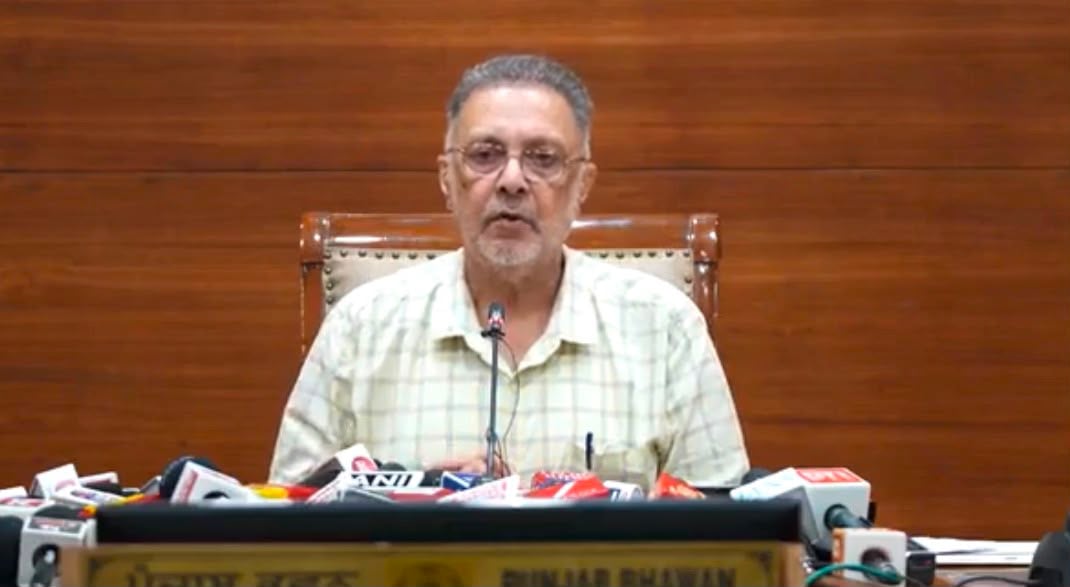
Addressing a press conference to mark 500 days of the campaign, Dr. Balbir Singh said the initiative, launched by Chief Minister Bhagwant Mann under the vision of AAP National Convenor Arvind Kejriwal, is aimed at protecting Punjab's youth through a comprehensive and long-term approach.
"The slogan of our campaign is 'Protect, Heal and Prevent.' This is not merely an anti-drug drive but a mission to safeguard Punjab's future generations. We are fulfilling our promise to eliminate the drug menace with honesty, determination and a well-planned strategy," the minister said.
He said the government has adopted a holistic model by integrating the Police, Health, Education, Sports, Prisons and Social Security departments to simultaneously crack down on drug traffickers, provide treatment to addicts and prevent substance abuse among future generations.
Highlighting the campaign's achievements since its launch on March 1, 2025, Dr. Balbir Singh said 52,432 FIRs have been registered under the NDPS Act and more than 73,300 drug peddlers have been arrested, including 621 major traffickers caught with over two kilograms of heroin.
The minister said public participation has played a crucial role in the campaign's success. The Safe Punjab Helpline (97791-00200) has received 46,342 public tip-offs, leading to the arrest of 22,960 drug traffickers, reflecting growing public confidence in the government's anti-drug efforts.
Comparing the current government's performance with previous administrations, Dr. Balbir Singh said the Bhagwant Mann Government has recovered 6,608 kg of heroin in four years, surpassing the combined 5,229 kg seized by the Akali and Congress governments over the previous 15 years.
He also highlighted the government's financial crackdown on drug networks, stating that ₹847 crore worth of properties belonging to drug traffickers have been confiscated and illegal structures built with drug money demolished.
Punjab has also achieved one of the country's highest conviction rates in NDPS cases at 89 per cent, which the minister attributed to stronger investigation and prosecution.
On the rehabilitation front, Dr. Balbir Singh said Punjab now has 213 de-addiction centres, 90 rehabilitation centres and 547 Outpatient Opioid Assisted Treatment (OOAT) clinics, with treatment available free of cost at government facilities. More than 10 lakh people have been registered under the OOAT programme, while over 38,000 patients have received in-patient treatment since the campaign began.
Minister added that 10,917 individuals have been granted immunity from prosecution under Section 64A of the NDPS Act, enabling them to seek treatment instead of facing punishment.
He said prison reforms have also been strengthened with OOAT facilities operational in 19 jails and dedicated de-addiction and wellbeing clinics established in 10 central jails.
Dr. Balbir Singh highlighted initiatives such as the Soorma – Ambassador of Recovery Programme, where recovered addicts motivate others to seek treatment, and the Leadership in Mental Health Programme, India's first government fellowship focused on preventing substance abuse.
He further said over 12,000 Village Defence Committees, comprising more than 1.25 lakh members, are actively supporting awareness campaigns and assisting law enforcement by reporting drug trafficking.
Raising concerns over cross-border smuggling, Dr. Balbir Singh urged the Union Government to strengthen surveillance along the India-Pakistan border and intensify action against international drug syndicates and gangster networks allegedly operating from prisons outside Punjab.
"The fight against drugs cannot be won through enforcement alone. It requires public participation, compassion, rehabilitation and a collective commitment to protect our youth. The Bhagwant Mann Government will continue this mission until Punjab becomes completely drug-free," he said.