Punjab Newsline | Chandigarh
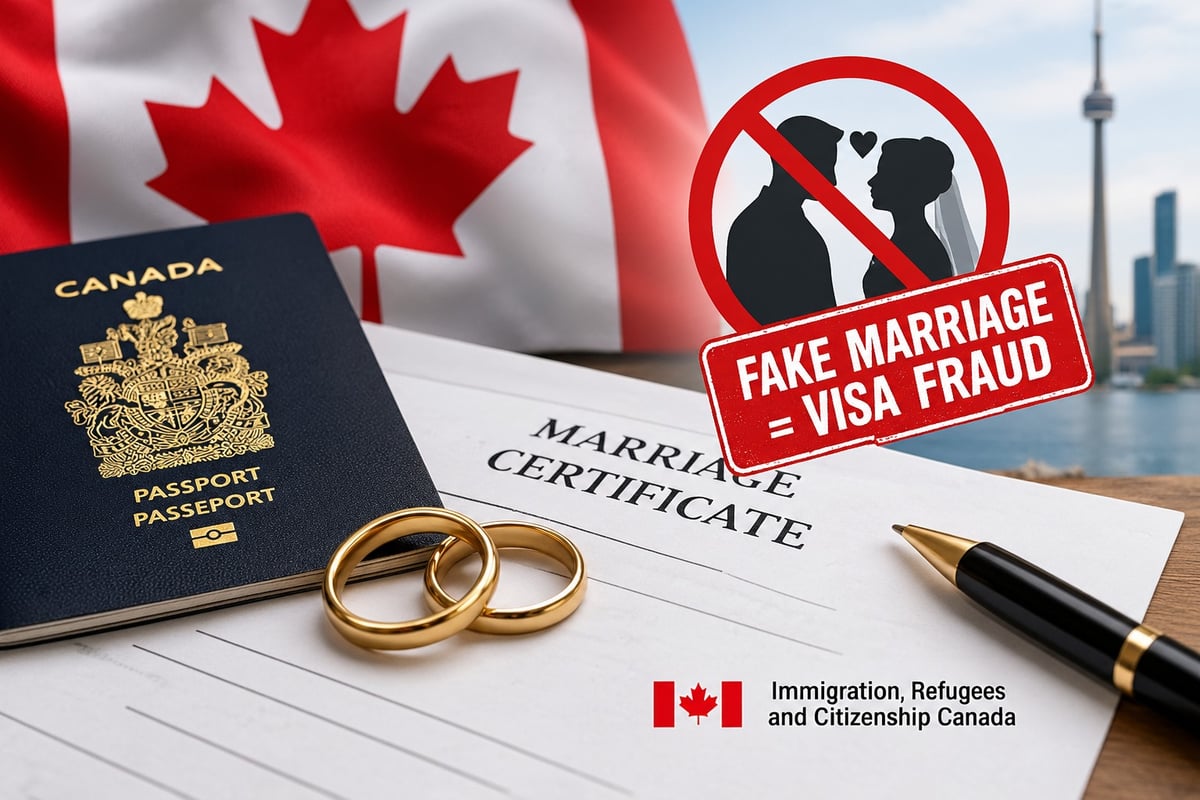
Amid intensified scrutiny of immigration applications and stricter visa regulations, the Canadian government has issued a fresh warning against marriage fraud, cautioning citizens, permanent residents and foreign nationals about the serious legal consequences of entering into relationships solely for immigration benefits.
In an advisory shared on social media by Immigration, Refugees and Citizenship Canada (IRCC), authorities expressed concern over growing attempts to obtain visas and permanent residency through fraudulent marriages. The department urged individuals to thoroughly verify the background of a prospective spouse before agreeing to sponsor them for immigration purposes.
Officials advised people to exercise caution, particularly in cases where a person has been met only recently, is pressuring for a quick marriage, or has a questionable personal or family history. The advisory warned that individuals involved in sponsoring someone through a fraudulent marriage could face criminal charges and other legal penalties.
Canadian authorities also emphasized that visa officers receive specialized training to identify sham relationships and marriages of convenience. Through detailed document verification, background checks and interviews, immigration officials are increasingly able to distinguish genuine relationships from fraudulent ones.
The warning comes at a time when concerns are rising over so-called “contract marriages” linked to international migration. In many cases, individuals reportedly finance the education and overseas relocation of a partner with the expectation of later obtaining entry through a spousal visa.
However, authorities and community groups have noted an increase in cases where such relationships break down after immigration, leading to allegations of deception and fraud.
The Canadian government said the measures are aimed at protecting the integrity and transparency of the country’s immigration system. At the same time, officials reassured spouses facing domestic violence that they can seek legal assistance and protection without automatically jeopardizing their immigration status.