Punjab Newsline | Chandigarh
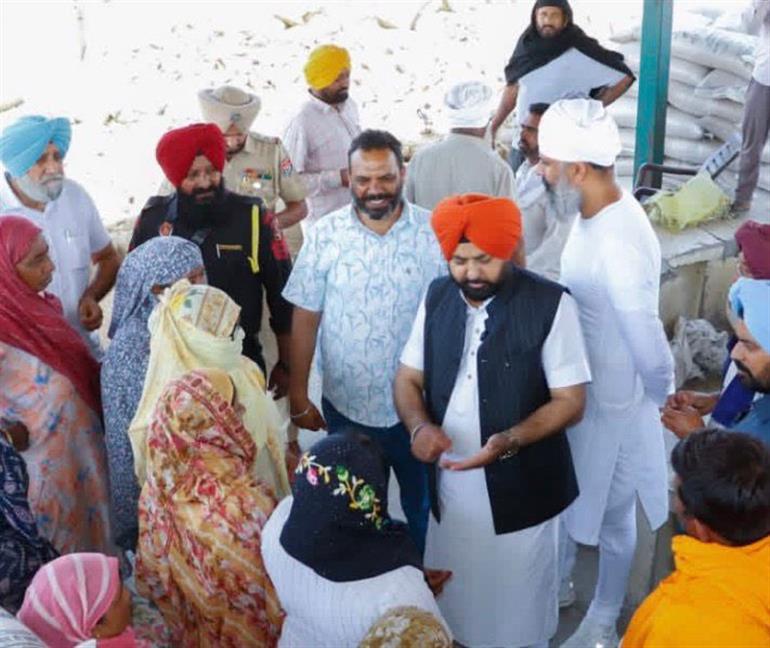
Punjab Revenue, Rehabilitation and Disaster Management Minister S. Hardip Singh Mundian said that the Punjab Government, led by Chief Minister Bhagwant Singh Mann, has approved a relief package of over ₹123.28 crore for farmers whose crops were damaged due to hailstorms that hit parts of the state last month.
He said that immediately after district administrations completed ground-level assessments, the state government took swift action to ensure timely compensation for affected farmers so that they could recover from sudden losses during the harvest season.
The minister informed that a total relief amount of ₹123,28,05,938 has been sanctioned for crop damage across 92,695 acres in 111 villages across seven districts. The damage includes 992 acres with 26%–32% loss, 61,115 acres with 33%–75% loss, and 30,588 acres with 76%–100% crop damage.
He said, “Our government stands shoulder to shoulder with the farming community in times of crisis and ensures that financial hardships caused by natural disasters are addressed through immediate intervention.”
Mundian added that Fazilka district received the highest relief amount of over ₹44.24 crore, followed by Sri Muktsar Sahib with over ₹43.01 crore, Bathinda with ₹22.83 crore, Moga with ₹7.73 crore, and Amritsar with over ₹5.26 crore.
He further stated that Ferozepur and Rupnagar districts were also sanctioned compensation of around ₹17.10 lakh and ₹1.35 lakh respectively.
The minister said the compensation has been calculated based on the severity of crop damage, covering losses ranging from 26 percent to complete destruction, ensuring a fair and transparent system for all affected farmers.
Mundian also directed Deputy Commissioners to complete all remaining formalities at the earliest so that the approved funds can be transferred directly into beneficiaries’ accounts without delay. He reiterated that the government is fully committed to protecting farmers’ interests and providing immediate relief whenever natural calamities threaten rural livelihoods.